
Night Dive or Day Dive in Kona? How We’d Help You Choose
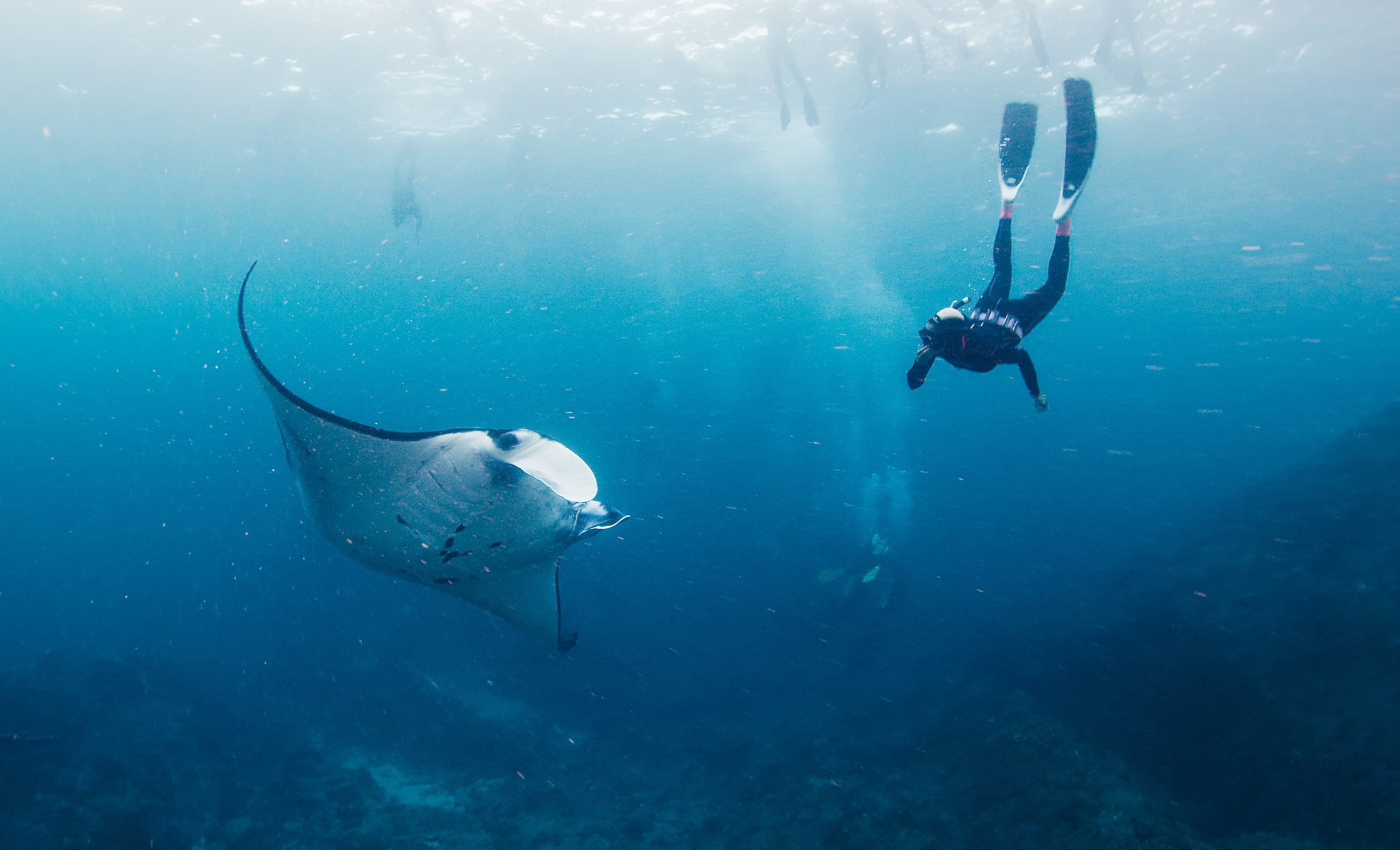
Kona might be the only place where the hardest diving decision is what time of day to get in the water. By day, you drop onto lava reefs so clear you can see 80 or 100 feet down a wall. By night, the same coast turns into something else entirely.
Manta rays circle in the lights, or you drift through the strange world of a black water dive far offshore. Both are world-class. They’re just completely different experiences. If you’ve got a summer trip booked and can only fit a dive or two, this is how we’d help you choose between Kona’s day dives and its famous nights.
Quick Summary: Key Takeaways
- Day diving: Clear water, lava tubes, arches, and reef life down long volcanic walls — Kona’s daytime visibility is among the best anywhere.
- The manta night dive: Kona’s signature after-dark experience, where reef mantas feed in the glow of dive lights just offshore.
- Black water diving: A deep-water night drift far from shore, watching tiny creatures rise from the depths — for experienced, adventurous divers.
- Which to pick: New divers and families lean day; thrill-seekers and photographers shouldn’t miss a night dive.
- Mantas are residents: More than 290 individual mantas have been cataloged off Kona since 1991, so the odds on a night dive are genuinely good.
What Day Diving in Kona Delivers
Daytime is when Kona shows off its water clarity. The island’s young lava coastline drops fast into deep, clear blue, giving you reef walls, arches, lava tubes, and swim-throughs with visibility that regularly runs 80 to 100 feet. You’ll see honu cruising, schools of yellow tang, eels, the odd reef shark, and coral healthier than most of the Pacific.
Day dives are also easier. Warm water, calm summer mornings, and good light make them ideal for newer divers, refresher dives, and anyone who wants to actually see the whole reef around them. If you only do one dive and you’re not certified for much, day is the answer. No question.
Why the Manta Night Dive Is Kona’s Signature
If you ask what to do after dark in Kona, the answer is the mantas. Just offshore, dive lights draw clouds of plankton, and the plankton draws in reef mantas that loop and barrel-roll inches over your head — an encounter that lands on most divers’ all-time lists. It’s reliable, too.
More than 290 individual mantas have been identified along the Kona coast since 1991, and many return to the same feeding sites again and again. You kneel on the bottom or hang at a surface float and just watch. It works for scuba divers and snorkelers alike. Everyone’s welcome. For a lot of people, floating in the dark while a twelve-foot manta banks overhead and slides right through the beam of their light, it’s the best hour they spend in all of Hawaii.
Black Water Diving Is a Different Animal
For experienced divers who want the wild edge of Kona nights, there’s black water. The boat runs offshore into water thousands of feet deep, drops a lit line, and you drift in the open ocean watching bizarre, tiny creatures rise from below — larval fish, jellies, squid, things most people never see alive. It’s otherworldly.
It’s surreal and a little intense. This isn’t a beginner dive; you need to be comfortable with buoyancy and the dark. But for underwater photographers and divers who have done it all, black water is one of the most unusual dives on Earth. We only run it with the right divers, and we’re honest about who’s ready.
How to Choose Between Them
Start with your experience level and who’s with you. Families, new divers, and anyone nervous in the water should lean toward a day dive — clear, calm, easy to enjoy — while the comfortable divers after a genuine bucket-list moment should book the manta night dive, the one people fly all the way here for.
And if you’re a seasoned diver chasing something rare, black water is the swing for the fences. Can’t decide? Good news. Do a day reef dive and the manta night dive on the same trip — they’re so different that doing both is the move we recommend most.
Making the Most of a Summer Dive Trip
Summer is a great time to dive Kona, whichever you choose. The seas are calm, the water is warm into the low 80s, and evening manta trips run smoothly. Book the day dives for the morning when the light is best, and save the manta dive for after sunset — you can genuinely do both in a day.
We’ll match the dive to your certification and comfort, and we keep groups small, so you’re not lost in a crowd. Plan ahead in summer. It’s our busy season, and the best night slots fill first. They go fast.
Frequently Asked Questions
Q: Is the Kona manta night dive worth it?
A: For most divers and snorkelers, absolutely. Reef mantas gather to feed in the dive lights just offshore, often several at once, looping right over you. It’s reliable and accessible to all skill levels, which is why it’s Kona’s most famous dive.
Q: What is black water diving in Kona?
A: Black water diving is a night dive done far offshore over very deep water. You drift beside a lighted line and watch tiny deep-sea creatures rise toward the surface after dark. It’s an advanced, surreal dive best suited to experienced, confident divers.
Q: Should beginners do a night dive in Kona?
A: The manta night dive is beginner-friendly, and snorkelers can join, so new divers do it all the time, while black water diving, on the other hand, is strictly for experienced divers only. If you’re just starting out, pair a daytime reef dive with the manta experience.
Q: Is summer a good time to dive in Kona?
A: Yes. Summer brings calm seas, warm water in the low 80s, and excellent visibility, and the evening manta dives run smoothly. It’s a popular season, so booking your dives — especially the manta night dive — well ahead is smart.
Pick Your Kona Dive, and We’ll Handle the Rest
Day or night, Kona rewards divers like few places on Earth, and half the fun is deciding how to spend your time underwater. Start with our Kona scuba diving trips for the daytime reefs, then read up on the manta ray night dive that made this coast famous. Prefer to float on the surface? The late-night manta snorkel gets you the same show without a tank. Experienced and hungry for something rare? Ask about the black water night dive, or ease in with our 2-tank morning dive and start with the reef in daylight.