
Half Your Group Dives and Half Doesn’t. You Can Still Go Out Together.
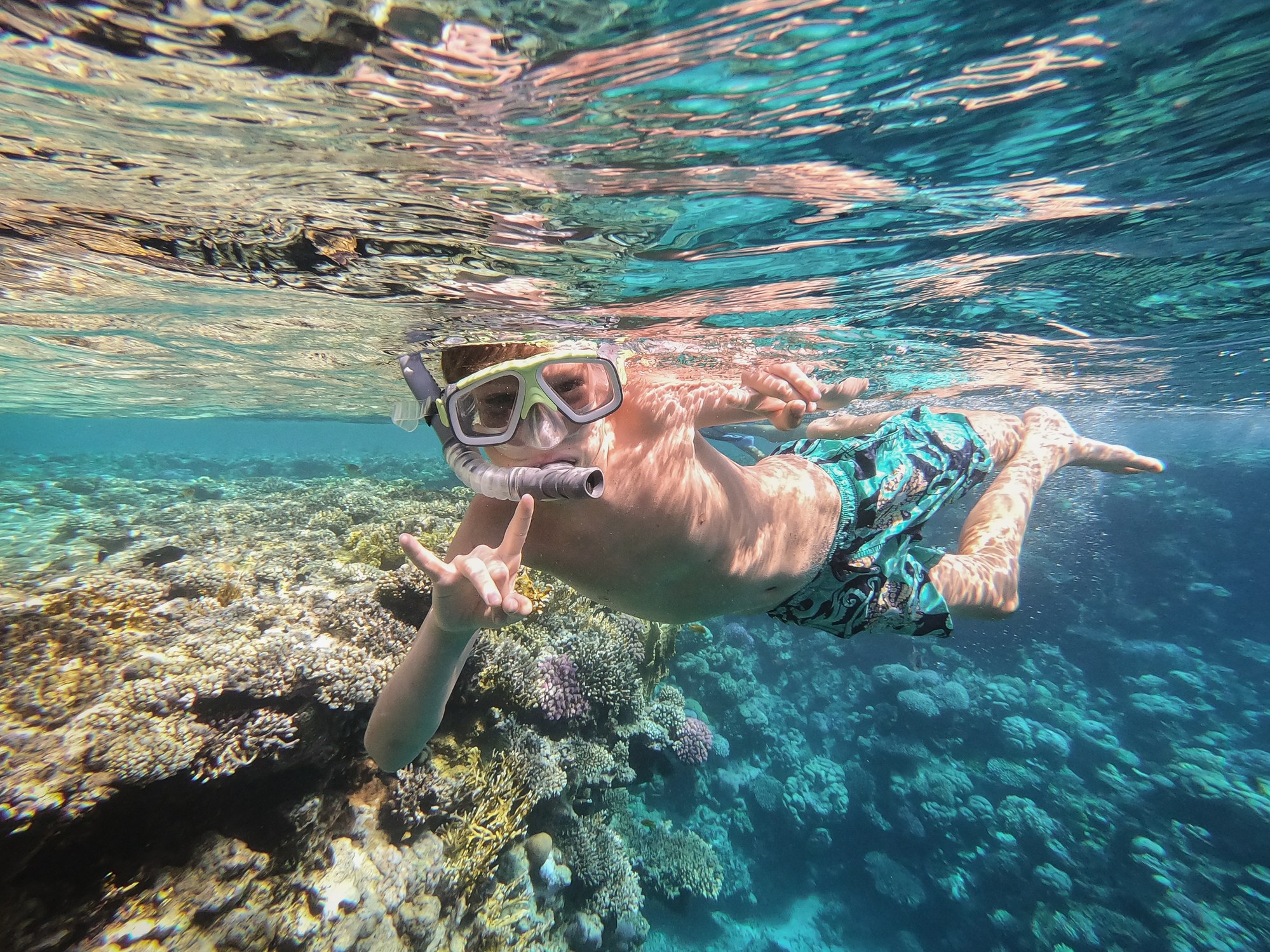
Four people in the party and two certifications between them is the booking we get most often, from families and from groups of friends. One or two want tanks, somebody has never had their face in the water, and nobody wants to split the day into two separate tours at two separate prices. Our afternoon reef and manta trip is built to carry both at once, and the people on top of the water usually see as much as the people underneath it.
The Same Boat, Two Depths
On that trip the divers drop to about forty feet along the reef while the snorkelers work the surface above them. Everyone is looking at the same place from a different angle.
Kona’s coastline makes this possible in a way most dive destinations do not. The lava shelf falls away close to shore, so the coral that divers are photographing at depth is often still visible from the surface, and the water clarity does the rest. An adult snorkeler and a certified diver pay the same $265, board the same boat and run three and a half to four hours together.
→ afternoon reef and manta snorkel or scuba adventure
Roughly six in ten of the people on that trip mix snorkeling and scuba within one party, so a mixed group is the normal case on the boat rather than the awkward exception.
Gear Comes With the Trip, on Both Sides
Nobody in a mixed group needs to own anything, which removes the argument about whether it is worth buying equipment for one week in Hawaii.
The afternoon reef and manta trip hands out wetsuits, snorkel and scuba gear, and LED light boards. That board is a float you hold while plankton gathers under it, and it is the reason snorkelers often get the better manta view, because the animals come up to feed at the light. Divers carry a surface marker buoy. Reef-safe sunscreen is included on that trip too, so there is no scramble for it at the harbor.
Crew side, our staff are DAN trained and the boats carry an AED and oxygen. A mixed group also means the water is being watched from two levels at once, which we would rather have.
What Each Side Actually Sees
Divers get time and closeness. Snorkelers get coverage and light.
At forty feet a diver can hang at a cleaning station while green sea turtles sit still and get picked over, swim through lava arches, and stay with a single piece of reef long enough to watch something happen on it. From the surface you cover far more ground in the same hour, the colors are brighter because the light has not been filtered through forty feet of water, and you see the turtles from above, which is a view divers miss.
Keep your distance either way. NOAA Fisheries asks people in Hawaii to stay at least 10 feet, or three meters, from a sea turtle, on land and in the water. Our guides will say it before you get in, and they will say it again if a honu drifts toward you, because the rule is on you and not on the animal.
Where the Groups Should Split Up
Not every trip suits both. One of ours is for divers only, and we will tell you so when you call.
That one is the black water night dive. It is for advanced certified divers with at least 50 logged dives, and there is no place on it for snorkelers. The morning two-tank dive does take snorkelers, at the same $265 as a diver, but the day is built around the dive sites rather than the surface. It also needs at least four divers aboard to run. Short of that, we reschedule the trip or refund it in full, so adding a snorkeler to the booking won’t get the boat out.
If one half of your party wants that and the other half wants a reef afternoon, book them separately on different days instead of hunting for a compromise trip that does neither well.
→ a private charter for your own group
Booking a Mixed Group Without a Mess
Book the whole party on one reservation. Splitting a group across two bookings is how people end up on two different boats on the same morning.
Tell us the mix when you book: how many tanks, how many on the surface, and whether anyone is nervous in open water. Group size decides the cancellation window too, which catches people out. Six passengers or fewer have a 48-hour window; seven or more sit at 72 hours, so a large family needs to firm up its plans a day earlier than a couple does.
Frequently Asked Questions
Q: Can a snorkeler go on a scuba boat in Kona?
A: Yes, on most of ours. Snorkelers ride with divers on the afternoon reef and manta adventure, the two-tank morning dive and Discover Scuba, all at the same $265 as a diver. The black water night dive is for advanced certified divers only.
Q: Do snorkelers and divers see the same thing?
A: They see the same reef from different positions. Divers get closer and stay longer; snorkelers cover more water and get brighter color. On the manta trips the snorkelers often have the better view, because the light boards sit at the surface where the mantas feed.
Q: Does a snorkeler pay less than a diver?
A: On the afternoon reef and manta trip the rate is the same for both. You are paying for the boat, the crew and the site, not for the tank.
Q: What if someone in the group has never snorkeled?
A: Say so when you book. The crew runs through the gear before anyone gets in, flotation is available, and the guide keeps an eye on first-timers. Plenty of people in our water have never used a mask before that morning.
A Mixed Group Is a Normal Booking Here
Send us the group, the dates, and who is certified. We will put the right trip in front of you and say plainly if your party is better off on two different days.
Kona Ocean Adventures · Honokohau Marina, Kealakehe Pkwy, Kailua-Kona, HI 96740 · konaoceanadventures.com