
What Happens on a 2-Tank Scuba Dive in Kona, Hawaii?
Quick Takeaways
- A 2-tank dive is two morning dives over lava tubes, coral arches, and reefs, running up to about four hours with a surface interval between dives.
- The day starts at Honokohau Small Boat Harbor, about 15 minutes from the Kona airport, with departures at 8:30 a.m. and 12:30 p.m.
- The 2-tank day dive is $265 per person and requires certification; non-certified guests can try the Discovery Scuba program for $399.
- Summer (May through September) brings water of 75 to 80 degrees and visibility often past 90 feet, so no thick wetsuit is needed.
- Boats cap at seven guests, and the operation has followed Divers Alert Network safety protocols since 2015; call (808) 930-9861 to reserve.
A 2-tank scuba dive in Kona is the classic way to experience the Big Island’s underwater world, and summer is the season to do it. From May through September, the seas off the west coast turn glassy, surface temperatures hold between 75 and 80 degrees, and visibility regularly climbs past 90 feet. That means two full dives over lava tubes, coral-draped arches, and reefs alive with turtles and tropical fish, all in a single morning. If you have never done a multi-tank dive and are not sure what the day looks like, here is a clear walk-through of how it unfolds with Kona Ocean Adventures, from check-in at Honokohau Harbor to your surface interval between dives. Whether you are newly certified or have hundreds of logged dives, this is one of the most rewarding ways to see Kona.
Where Does the Dive Start and What Should I Bring?
Everything begins at Honokohau Small Boat Harbor, barely a 15-minute drive from the Kona airport, which makes it easy to fit a dive into a packed island itinerary. You check in at the designated time, and our crew handles the rest. If you are already certified, the guides verify your paperwork and set you up with gear. If diving is new to you, our Discovery Scuba program walks you through the basics on the way out so you can breathe comfortably underwater before you descend.
Bring a swimsuit, a towel, reef-safe sunscreen, and a sense of adventure. You do not need your own equipment, though you are welcome to bring it. We also offer free digital photos throughout the trip and underwater camera rentals if you want to capture the reef yourself. Because we cap our boats at seven guests, there is no jostling for space and plenty of room to gear up.
What Will I See on a Kona Dive?
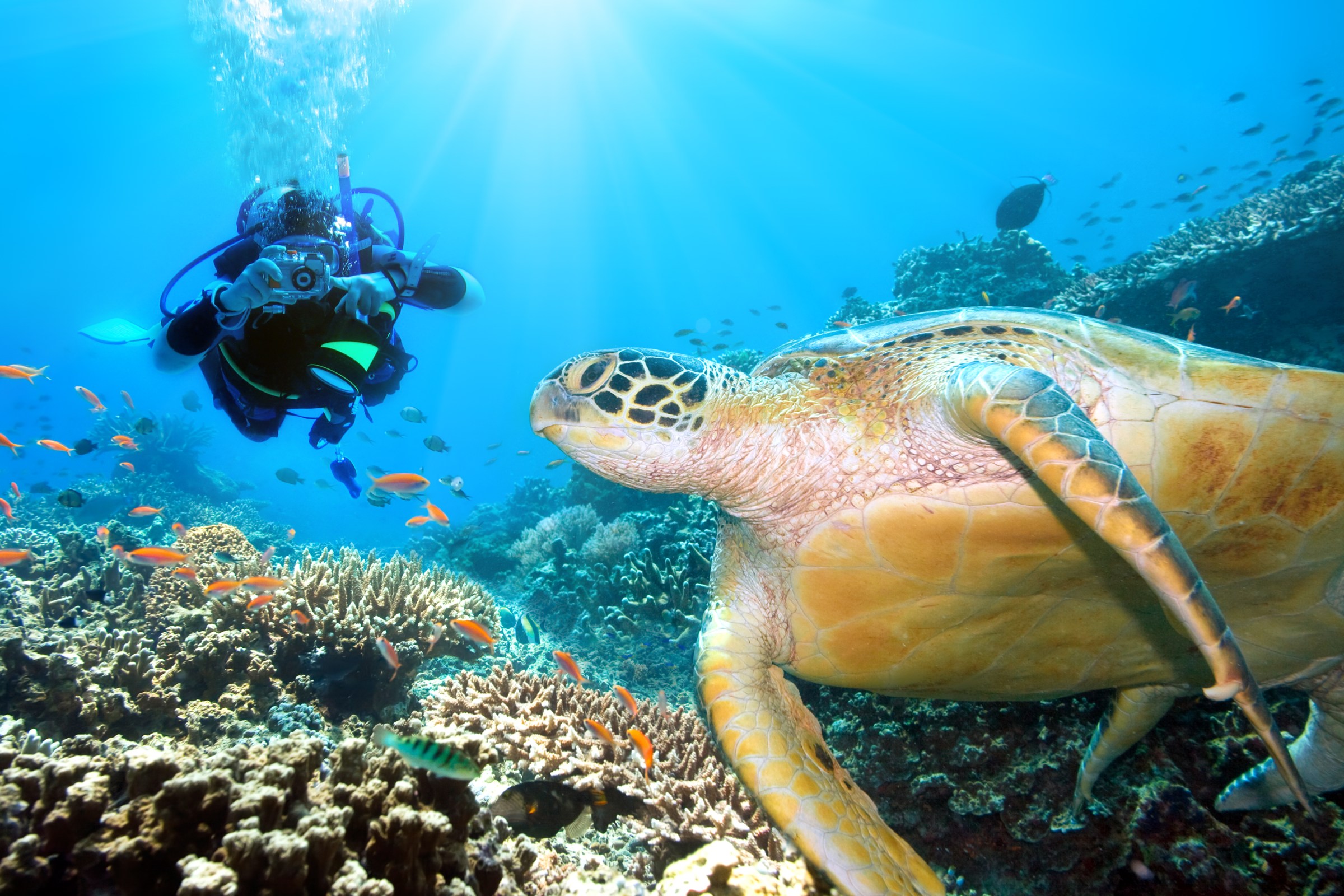
This is where Kona earns its reputation. The Big Island is young and volcanic, and that geology shapes the dive sites. You descend onto a landscape of lava tubes and arches carved by ancient flows, now dressed in living coral and patrolled by reef fish. Green sea turtles paddle past at eye level, octopuses tuck into crevices, and schools of yellow tangs and butterflyfish drift over the rock.
If you are lucky, spinner dolphins may appear in the distance, twisting through the water column. Many of the species here are endemic to Hawaii, so even experienced divers see fish they have never encountered elsewhere. The clarity does the rest. With visibility often beyond 90 feet in summer, you feel less like you are swimming and more like you are flying over the reef.
How Long Is the Trip and How Does the Surface Interval Work?
A 2-tank trip runs up to about four hours on the water. You complete your first dive, then return to the boat for a surface interval, the rest period that lets nitrogen safely off-gas from your body before the second dive. This is not downtime so much as part of the experience. You relax in the sun, swap stories with the crew and other guests, hydrate, and take in the Kona coastline before gearing up again for a second, different dive site.
We run departures at 8:30 a.m. and 12:30 p.m. to catch the calmest water and the windows when marine life is most active. Our crew has been guiding these waters for years, and since 2015, we have followed every Divers Alert Network safety protocol without cutting corners, including conservative dive profiles and proper surface intervals. Safety is exactly why the small-group format matters.
Is Summer the Best Time to Dive in Kona?
For the absolute best conditions, yes. Between May and September, the swell drops, the trade winds ease, and the water settles into long calm stretches with visibility often exceeding 90 feet. Warm water year-round means you skip the thick, restrictive wetsuit most cold-water divers are used to, and summer’s flat seas make for relaxed entries and exits, which matters most for newer divers.
Kona’s geography helps year-round, with minimal runoff and naturally protected, west-facing coastlines, but summer is when it all peaks. If you would rather stay at the surface or combine experiences, you can pair a dive with the manta ray snorkel after dark for a full day in Kona’s water. Groups of seven or more can also book a private charter to customize the trip entirely.
Frequently Asked Questions
Do I need to be certified to do a 2-tank dive in Kona?
The 2-tank day dive is designed for certified divers, and our guides will check your certification card before departure. If you are not certified, our Discovery Scuba program lets first-timers experience diving under close supervision, so you can still get underwater without a certification.
How much does a 2-tank dive in Kona cost?
Our 2-tank day dive is $265 per person, which includes tanks, weights, and guided diving with a small group. The Discovery Scuba option for beginners is $399. Free digital photos are included, and underwater camera rentals are available.
What is the water temperature for diving in Kona?
Kona’s water stays warm year-round, between roughly 75 and 80 degrees Fahrenheit. That means you do not need a thick wetsuit. A thin wetsuit or rash guard is plenty comfortable for most divers across the seasons.
What is the best time of day to scuba dive in Kona?
We run morning departures at 8:30 a.m. and afternoon departures at 12:30 p.m. Both times line up with calm conditions and peak marine activity. Mornings tend to be the flattest, while afternoons pair well with an evening manta encounter.
Book Your 2-Tank Kona Dive Today
Summer is peak season on the Big Island, our boats stay small at seven guests, and the best morning slots book early. If you want to dive Kona’s lava tubes and reefs in the clearest water of the year, call us at (808) 930-9861 or email [email protected] to reserve your spot now.